Skip to content
Engagement Examples

How Executive Coaching Creates Leadership Transformation

Representative examples of the executive challenges and outcomes our coaching methodology is designed to address.

These engagement examples illustrate the typical patterns we see in executive coaching: the challenges that bring leaders to coaching, the approach we take, and the kind of outcomes the Altitude Framework is designed to produce. Details anonymized to protect client confidentiality.

Engagement Example 1

From Failed Board Presentation to SVP Promotion

Challenge

A VP of Engineering at a Series D enterprise SaaS company delivered a board presentation that went badly. The CEO described it as too operational, too long, and lacking strategic clarity. The VP was told that the gap between board-level communication and their current performance was the primary obstacle to promotion. They had six months before the next board cycle to close the gap or risk being passed over for the SVP role they were targeting.

Approach

We began with an Altitude Assessment that revealed the core issue was not presentation skills. It was strategic framing. The VP was thinking about their function at a Director-level altitude and communicating accordingly. We spent eight sessions rebuilding how they framed their work for an executive audience: leading with strategic implications, cutting operational detail, and constructing a 12-minute narrative that connected engineering investment to business outcomes. Every session used live materials from their upcoming presentations.

Result

The VP's next board presentation received the strongest feedback of any functional leader that quarter. The CEO specifically cited the shift from operational reporting to strategic narrative. Within 18 months, the VP was promoted to SVP of Engineering, with board communication cited as a key factor in the promotion decision.

Engagement Example 2

New CTO Turns Around an Inherited Team

Challenge

A newly hired CTO at a mid-market HealthTech company inherited an engineering organization of 120 people with low morale, unclear technical direction, and two directors who had both been passed over for the CTO role. Employee engagement scores were in the bottom quartile. Attrition among senior engineers was accelerating. The board expected a turnaround plan quickly.

Approach

We focused the first four sessions on stakeholder mapping and political navigation. The CTO needed to build trust with the two passed-over directors before anything else could work. We coached a structured listening tour, developed individual engagement strategies for both directors, and built a 90-day plan that gave each of them meaningful ownership of the turnaround. Simultaneously, we coached the CTO on organizational communication: how to signal vision, competence, and respect in an environment where the team was predisposed to distrust the new leader.

Result

Within six months, both directors were actively supporting the new technical direction. Employee engagement scores improved by 23 points. Senior engineer attrition dropped to below industry average. The board cited the organizational turnaround as one of the strongest executive onboarding outcomes in the company's history.

Engagement Example 3

Director to VP: From Drowning in Operations to Top Performer

Challenge

A recently promoted VP of Product at an enterprise software company was drowning in operational detail. Despite working 70-hour weeks, they were falling behind on strategic commitments, missing signals from peers, and receiving consistent feedback from their CEO that they were still operating like a Director. The VP was six months into the role and at risk of being labeled a failed promotion.

Approach

The Altitude Assessment revealed the VP was spending 80 percent of their time on work their directors should have owned. We spent the first four sessions redesigning their operating model: what to delegate, what to own, and how to create accountability systems that did not require their direct involvement. The second phase focused on strategic contribution: how to prepare for ELT meetings, how to frame product investments at enterprise level, and how to build relationships with peers whose support they needed for cross-functional initiatives.

Result

Within three months, the VP reduced their working hours to 50 per week while increasing their strategic output. Their CEO cited a visible shift from operational management to strategic leadership in their first annual review. The VP was named one of the top three performers on the leadership team at year-end.

Engagement Example 4

SVP Positioned as CEO Successor

Challenge

An SVP of Operations at a $500M revenue enterprise technology company was on the CEO succession shortlist but lacked the board relationships and enterprise visibility to be the frontrunner. Two other SVPs were competing for the same succession track. The board had communicated that the next CEO would need to demonstrate enterprise-level thinking, strong board rapport, and the ability to lead across all functions, not just operations.

Approach

We designed a 12-month engagement focused on three areas: building individual relationships with board members, developing an enterprise strategic narrative that transcended the operations function, and creating visibility across the organization that positioned the SVP as a whole-company leader. We coached every board interaction, developed a communication strategy for cross-functional influence, and rehearsed the critical conversations that would shape the board's perception.

Result

After 12 months, the SVP was named the board's preferred CEO successor. Board members cited the quality of strategic thinking, comfort in board interactions, and demonstrated ability to lead beyond the operations function as the decisive factors. The formal succession timeline was set for 18 months.

Engagement Example 5

Startup CEO Scales Past 200 Employees

Challenge

A founder-CEO of a B2B SaaS company had successfully grown the business from inception to $18M ARR and 200 employees. But the leadership approach that worked at 50 people was breaking at 200. The CEO was still making most decisions, attending most meetings, and personally managing the VP layer. The board was concerned that the CEO's inability to scale their leadership would limit the company's growth trajectory and complicate the upcoming Series C raise.

Approach

We focused on three shifts: building a true executive team rather than a group of VPs who reported to the CEO independently, developing delegation systems that created accountability without requiring the CEO's direct involvement, and coaching the CEO to lead through narrative and culture rather than through individual decisions. We also prepared the CEO for the Series C board dynamics, coaching on investor communication and governance readiness.

Result

The CEO successfully raised a $40M Series C with strong investor confidence in the leadership team. The executive team began operating as a cohesive unit, reducing the CEO's direct involvement in operational decisions by approximately 60 percent. Revenue growth accelerated in the two quarters following the organizational changes, and the board expressed high confidence in the company's ability to scale to $50M ARR.

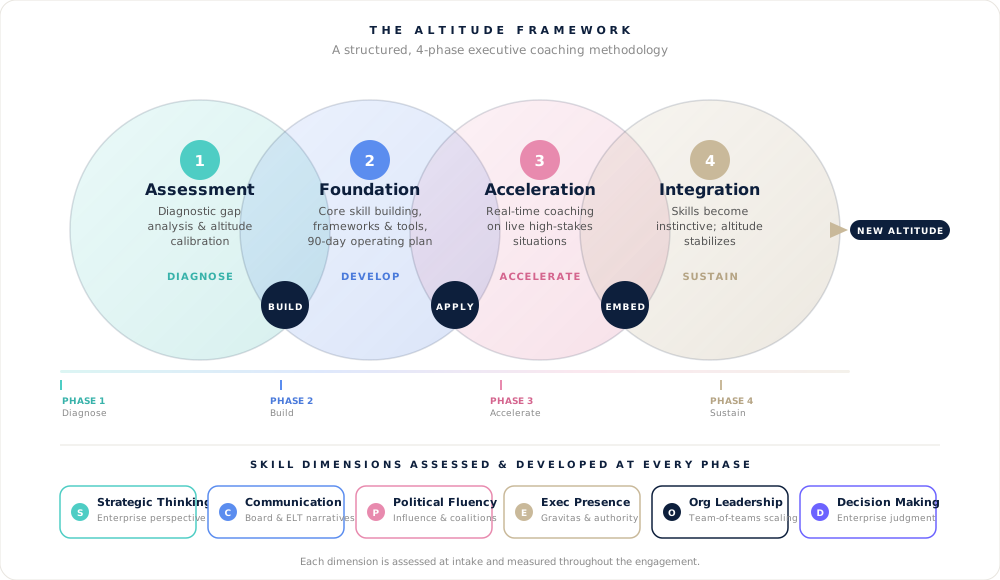
The Complete Framework

Four phases. One clear trajectory.

The Altitude Framework: 4-phase executive coaching methodology — Assessment, Foundation, Acceleration, Integration

See our full methodology →

Ready to address challenges like these?

Start with a complimentary 30-minute altitude assessment. We will diagnose the specific gaps between where you are and where you need to operate.

Book Your Assessment
Stay Sharp

Get executive leadership insights delivered to your inbox.

Perspectives on altitude transitions, executive skills, and what it actually takes to lead at the next level. No spam. Unsubscribe anytime.

Book Free Assessment