Skip to content
Our Methodology

The Altitude Framework: Our Executive Coaching Methodology

Structured. Skill-based. Built on real operating experience.

The Altitude Framework is a four-phase coaching methodology designed to close the specific gap between where you operate today and where your role demands you operate. Every engagement is built around skill development and written deliverables.

What is The Altitude Framework?

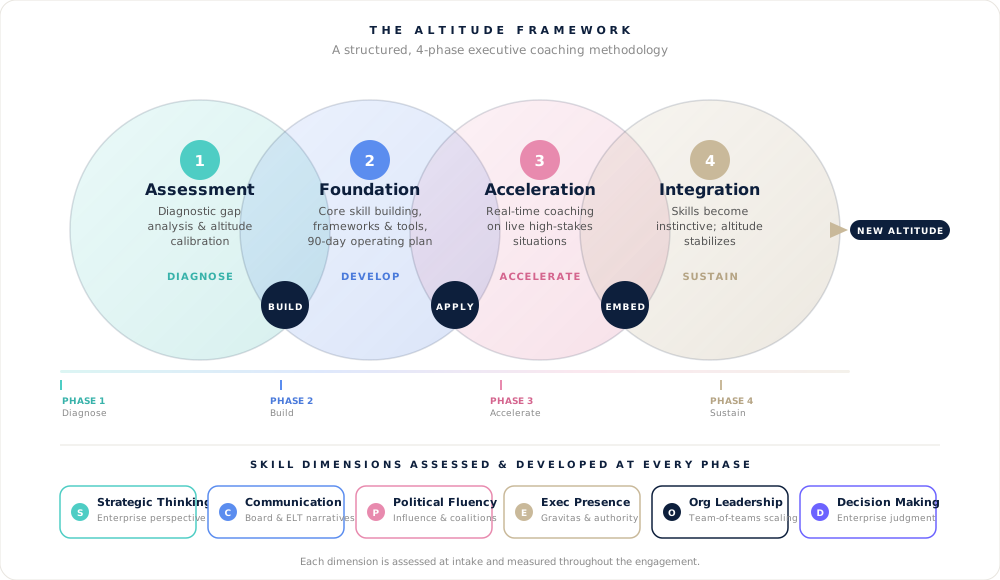
The Altitude Framework is Stratos Coaching's four-phase methodology: a diagnostic altitude call, Foundation Building, Acceleration, and Integration. Engagements run 6–12 months, with 60-minute sessions every two weeks and asynchronous access between sessions, and every phase produces a written deliverable — from a gap assessment to a forward-looking development plan.

Why It Matters

Why does a skill-based coaching methodology matter?

We built the Altitude Framework because executive leaders deserve a coaching methodology that treats leadership as a set of learnable, measurable skills. Every session is structured around skill development. Every engagement produces written deliverables. Every outcome is tracked against the altitude your role demands.

Our coaches have held VP, SVP, and C-suite roles at enterprise companies. They coach from direct operating experience at the altitude where you need to perform. For a fuller picture of what high-quality work in this field actually looks like, read our breakdown of what great executive coaching looks like.

Structured executive coaching methodology
The Complete Framework

How does The Altitude Framework work?

The Altitude Framework: 4-phase executive coaching methodology — Assessment, Foundation, Acceleration, Integration
Phase 1

What happens in the Altitude Assessment?

Diagnostic gap analysis — where you are versus where you need to operate.

Before we coach anything, we diagnose everything. The altitude call is a structured evaluation of where you currently operate across the key dimensions of executive leadership: strategic thinking, executive communication, reading the organization, people leadership, and executive communication. If you are curious about what happens in an executive coaching session, this is where it starts.

We compare your current operating altitude against what your specific role demands. A new VP at a Series C company has different altitude requirements than a CTO at a Fortune 500. The assessment is calibrated to your context, not to a generic leadership model.

What you receive: A written gap assessment documenting your current altitude across all dimensions, the specific gaps between where you are and where you need to operate, and prioritized recommendations for your coaching engagement.

Phase 2

How does Foundation Building work?

Building the core executive skills your role demands.

Based on the altitude call, we identify the two or three foundational skills that will have the highest impact on your performance. These become the focus of intense, structured coaching over the first four to eight sessions.

Foundation Building is not abstract. We use your real business challenges as the coaching material.

If the gap is strategic communication, we rebuild your next ELT presentation together. If the gap is reading the organization, we map your actual stakeholder landscape and develop an influence strategy. Every session produces something you can use the same week.

What you receive: An operating plan tailored to your specific role and gaps, frameworks and tools for the foundational skills we develop together, and structured practice on live business challenges.

Leaders working through a structured coaching process
Phase 3

What happens during Acceleration?

Real-time coaching on live challenges as skills sharpen.

Once the foundational skills are in place, coaching shifts to real-time application. This is where you bring your most challenging situations into the coaching sessions and we work through them together. The board presentation that needs to land. The difficult conversation with a peer. The strategic decision with incomplete information.

Acceleration is where coaching delivers the highest ROI. You are no longer learning skills in the abstract. You are applying them under pressure, getting feedback in real time, and accelerating your development faster than experience alone could deliver. See our analysis of executive coaching ROI for a deeper look at why this phase produces measurable business impact.

What you receive: Real-time coaching on your highest-stakes situations, progressive skill refinement based on live application, and between-session support for time-sensitive challenges.

Phase 4

What does Integration look like?

Skills become instinctive and your operating altitude stabilizes.

The goal of every engagement is integration: the point where the skills we developed become your default operating mode. You no longer have to think about framing strategically or managing stakeholders consciously. These capabilities become instinctive.

For clients on our Annual Partnership, this phase includes ongoing coaching sessions at a reduced cadence, focused on maintaining altitude and addressing new challenges as they emerge. For coaching clients completing an Accelerated Engagement, we provide a transition plan that ensures the skills continue to develop after the engagement concludes.

What you receive: An altitude progress report documenting skill development and growth areas, a forward-looking development plan for continued growth, and optional ongoing advisory support at a reduced cadence.

The Operating System

What does an engagement look like week by week?

The Altitude Framework has four phases. Here is what they look like on a calendar. Engagements run 6–12 months with two 60-minute sessions a month; a 12-month engagement extends Acceleration and Integration rather than adding phases.

WhenWhat happensWhat you get
Before day oneComplimentary 30-minute altitude call. We map your current role, the transition in front of you, and the specific situations you are navigating. If coaching is not the right move, you hear that here.A written engagement proposal within 48 hours
Week 1Altitude Assessment begins. Structured evaluation across the five dimensions of executive altitude. DISC behavioral assessment dispatched. Where the engagement calls for it, confidential stakeholder interviews with your manager, peers, and direct reports.Assessment underway
Week 2First working session. Assessment results are worked through together, not handed over. Three to five specific goals set, each with an observable behavioral marker attached.Written gap assessment. Development plan with measurable goals
Weeks 3–8Foundation Building. Sessions every two weeks, 60 minutes, with asynchronous access between sessions. Work concentrates on the two or three capabilities the assessment identified as load-bearing — not everything at once.Stakeholder maps, operating-model drafts, communication frameworks
Month 2First checkpoint. Are the behavioral markers moving? What is landing, what is not, and what needs to change in the plan.Checkpoint note against each goal
Months 3–4Acceleration. The work moves to live, high-stakes situations as they arrive — board presentations, ELT dynamics, reorganizations, succession conversations, difficult peers. Rehearsal before, debrief after.Session-by-session preparation and debrief
MidpointFormal midpoint review. Every goal assessed against its behavioral marker. Scope adjusted where the role has moved underneath you.Written midpoint review
Months 5–6Integration. Consolidating the new operating model so it holds without a coach in the room. The focus shifts from doing the work together to you running it and reporting back.Handover of the operating model
Wrap-upClosing Altitude Assessment — the same five dimensions, scored again. The comparison against week one is the evidence.Closing gap assessment and forward development plan
The Diagnostic

What five dimensions do we coach and measure?

The Altitude Assessment evaluates a leader across five dimensions. Every Stratos Coaching engagement opens and closes with the same five-dimension assessment, and the comparison between the two is the evidence of change.

  1. Strategic thinking. The shift from owning execution to owning direction — setting a multi-year thesis and defending it under pressure.
  2. Executive communication. Landing a clear senior-level message in unscripted rooms: recommendation first, then the reasons, whether you had a week to prepare or were pulled into a review cold.
  3. Decisiveness under ambiguity. Committing on large, open-ended problems instead of waiting for a picture that never gets perfect — and treating a wrong first move as data rather than a verdict.
  4. People leadership. Hiring well, running honest growth conversations, calibrating fairly, and delegating so the team scales beyond what you can personally touch.
  5. Cross-functional influence. Winning alignment and buy-in from peers and teams you do not control, where the work gets done through people who do not report to you.

Working on all five at once is how coaching becomes conversation. The assessment identifies the two or three that are actually load-bearing for this leader in this seat, and the engagement concentrates there. For the week-by-week engagement calendar and how outcomes are measured, see our track record. For how these dimensions map to the five most common failure modes at SVP level, see why VP-to-SVP transitions fail.

Executives applying the coaching methodology in a team session
Measuring Progress

How do we measure coaching outcomes?

Written Gap Assessment
Every engagement begins and ends with a written assessment of your operating altitude. The comparison between your initial and final assessments provides concrete evidence of skill development.
Behavioral Markers
We define specific, observable behavioral markers for each skill we develop. These are not vague improvements. They are concrete changes in how you communicate, decide, and lead that others can observe.
Business Outcomes
The ultimate measure of coaching is business impact. We track outcomes like successful transitions, board feedback, stakeholder relationships, team performance, and career progression against the goals set during the assessment.

How we count an outcome

What counts as a transition. A promotion, an expanded scope, or a confirmed successor designation that occurs during an engagement or within twelve months of its close.

What assessments are included. A DISC behavioural assessment and a Strategic Development Plan are included in every engagement. Structured stakeholder feedback and formal 360-degree instruments are added where the engagement calls for it.

What is self-reported. Promotion outcomes, engagement scores, and attrition figures are reported by the client or their organisation. Stratos Coaching does not independently audit employer data.

Key Takeaways

  • Every engagement opens with a DISC behavioral assessment at no additional cost.
  • The Altitude Framework runs four phases — assessment, foundation building, acceleration, integration — across a 6- to 12-month engagement.
  • Sessions are 60 minutes every two weeks, with asynchronous access between them, tracked against three to five written development goals.
  • The methodology is delivered only by coaches who have held VP, SVP, and C-suite roles — see the coaches and how to start an engagement.
Professionals planning together in a collaborative workspace
Frequently Asked Questions

What do leaders ask about our methodology?

What is the Altitude Framework?

The Altitude Framework is Stratos Coaching's four-phase coaching methodology — Altitude Assessment, Foundation Building, Acceleration, and Integration. It is built for leaders navigating altitude transitions: the career moments when the skills that earned the promotion are no longer sufficient for the role ahead. Each phase produces a concrete output, from a DISC-informed development plan to a measurable wrap-up review.

How does a Stratos Coaching coaching engagement work?

Every engagement starts with a complimentary 30-minute altitude call. From there, your coach runs a DISC behavioral assessment, builds a development plan with three to five measurable goals, and works the plan with you in structured 1:1 sessions. Progress is reviewed at midpoint and wrap-up so the change sticks.

What assessments are included?

A DISC behavioral assessment is included in every engagement at no additional cost. It grounds the development plan in how you actually operate under pressure — how you communicate, decide, and respond to conflict — rather than generic leadership theory. Structured 360-degree feedback from your stakeholders can be added when the engagement calls for it.

How is progress measured?

Against the development plan. Each engagement sets three to five specific goals up front, reviews them at midpoint, and measures outcomes at wrap-up — promotion readiness, board-ready communication, stakeholder feedback. For market context on what coaching costs and returns, see our executive coaching cost guide.

Ready to see the Altitude Framework in action?

Start with a complimentary 30-minute altitude call. We will diagnose your specific gaps and show you how the framework applies to your situation.

Book a Free Call
Book a Free Call